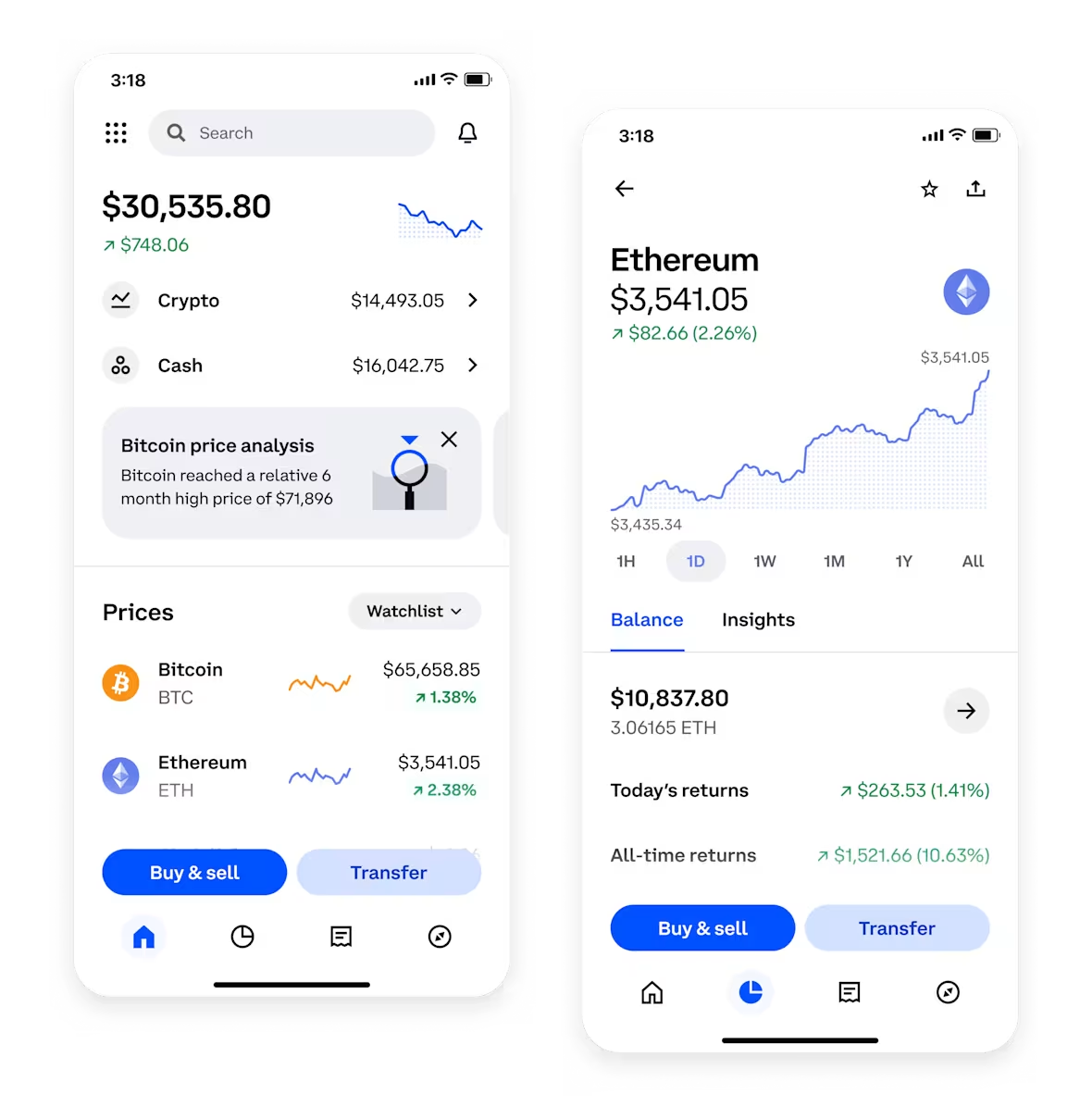

When managing cryptocurrency, security is often the top priority for serious traders. A Ledger hardware wallet provides cold storage for private keys, while exchanges offer liquidity and trading pairs. Combining the two allows you to trade directly from your secure wallet without transferring assets to a hot wallet. This article explains how to operate a Ledger wallet on a supported exchange, covering key steps and important considerations.
First, understand that most major exchanges now support hardware wallet integration. Platforms like Binance, Kraken, and Coinbase allow you to connect your Ledger via the WalletConnect protocol or through a direct browser extension. To begin, ensure your Ledger device is updated to the latest firmware using Ledger Live. Install the exchange’s application (e.g., “Binance” or “Ethereum”) on your Ledger via the “Manager” tab. This app will handle transaction signing.
Next, navigate to the exchange’s website or app. Look for the “Connect Wallet” option, typically found in the top-right menu or under “Wallet” settings. Choose “Ledger” from the list of supported hardware wallets. A QR code or connection prompt will appear. On your computer, open the Ledger Live app and select “Parity Signer” or “Web3” depending on the exchange. Follow the on-screen instructions to pair the device. For mobile users, many exchanges now support Bluetooth pairing with the Ledger Nano X.
Once connected, you can view your exchange balances directly within the Ledger interface. This setup allows you to place orders (limit, market, or stop-loss) while the private keys remain offline. When you confirm a trade, the exchange generates an unsigned transaction. Your Ledger will display the transaction details—verify the amount, asset, and recipient address on the device screen. Press the physical button to sign. This ensures that even if your computer is compromised, the private keys never leave the wallet.
Key benefits include protection against exchange hacks. Since your funds never leave the hardware wallet during trading, they are not at risk if the exchange platform is breached. Additionally, you avoid withdrawal fees when moving assets between exchanges, as you can trade directly from the same wallet address. However, note that not all trading pairs are available via hardware wallet integration. Most exchanges support major coins like Bitcoin, Ethereum, and ERC-20 tokens, but some altcoins may require a separate app.
Potential challenges include slower transaction speeds due to the hardware signing process. For high-frequency trading, a hot wallet might be more practical. Also, ensure the exchange’s native token (e.g., BNB, ETH) is available on the Ledger app to pay for gas fees. If you encounter connection issues, try disconnecting and reconnecting the USB cable, or update the exchange app on your Ledger. For Bluetooth models, keep the device within 10 meters of the pairing device.
Finally, always test with a small amount first. Use the exchange’s “Send” function to transfer a minimal amount to confirm the connection is secure. Monitor your Ledger screen for any unexpected signing requests—never approve a transaction that displays an unfamiliar address. By following these steps, you can enjoy the liquidity of centralized exchanges while maintaining the cold-storage security of your Ledger wallet. This hybrid approach is widely adopted by experienced traders who prioritize both convenience and asset safety.